


See DC's iconic sites – monuments, memorials, museums – as they were, some over 100 years ago.
Scroll through to see interactive before-and-after photos of the Jefferson Memorial, the Washington Monument and many more famous sites.
2026 is full of once-in-a-lifetime opportunities to connect with history, from innovative exhibits to can't-miss events and festivals.
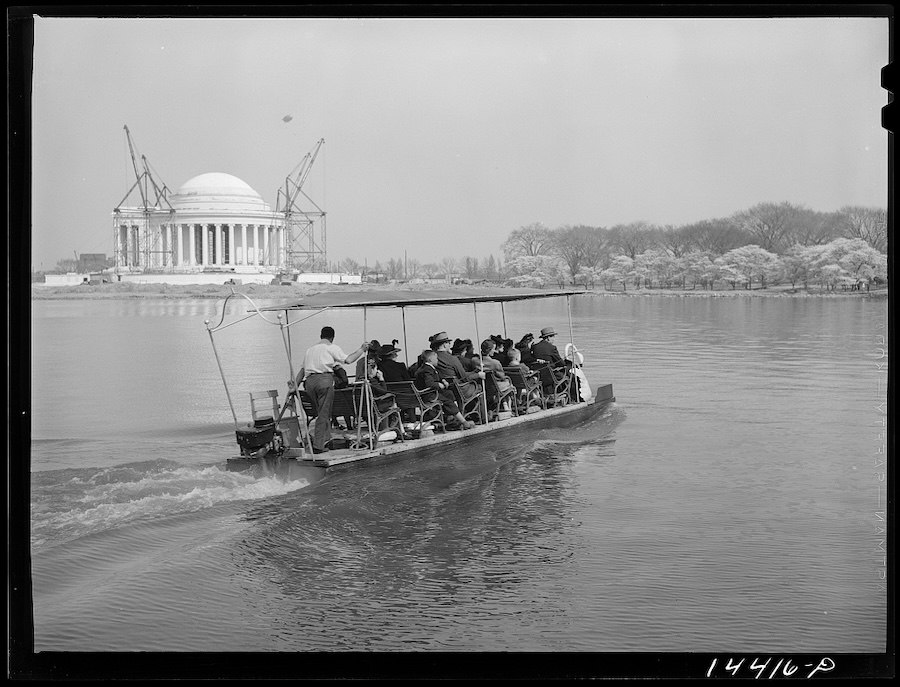
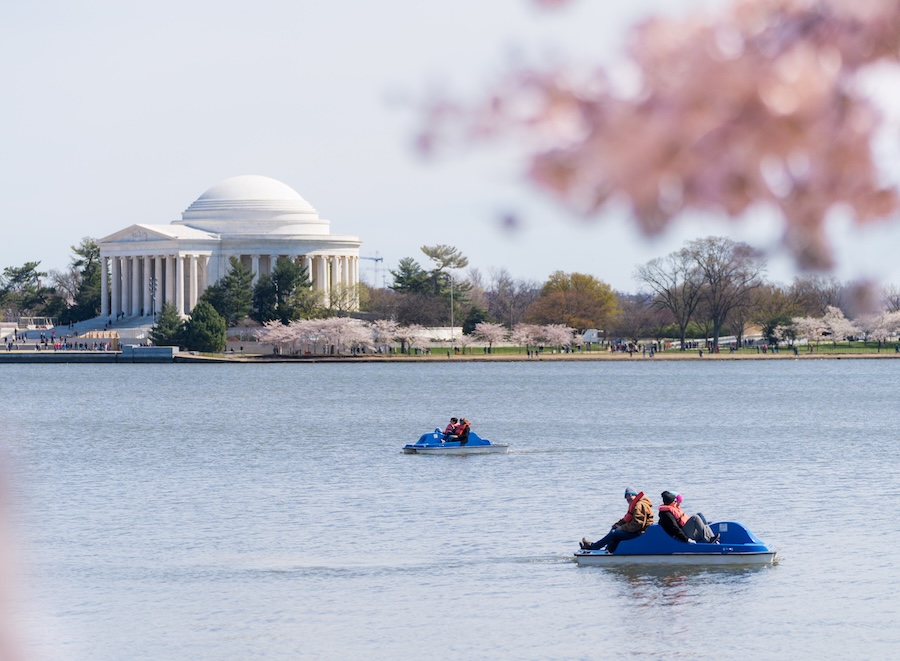
Around the Tidal Basin for a look at the cherry blossoms. Washington, D.C. Names Roberts, Martha McMillan, photographer Created / Published 1941 May. Sourced from the Library of Congress.
The Jefferson Memorial
Designed by John Russell Pope in 1925, the memorial resembles the Pantheon in Rome, an adaptation of Neoclassical architecture favored by Thomas Jefferson himself. Surrounded by water, the structure is located on the National Mall's Tidal Basin, a large body of water that is bordered by DC’s famous cherry blossom trees.
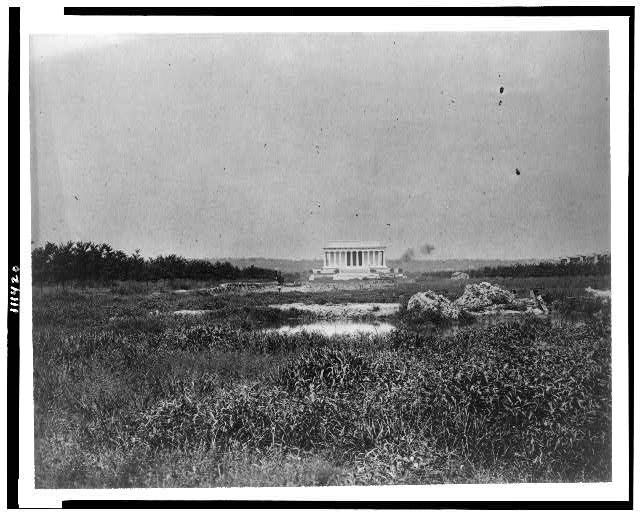
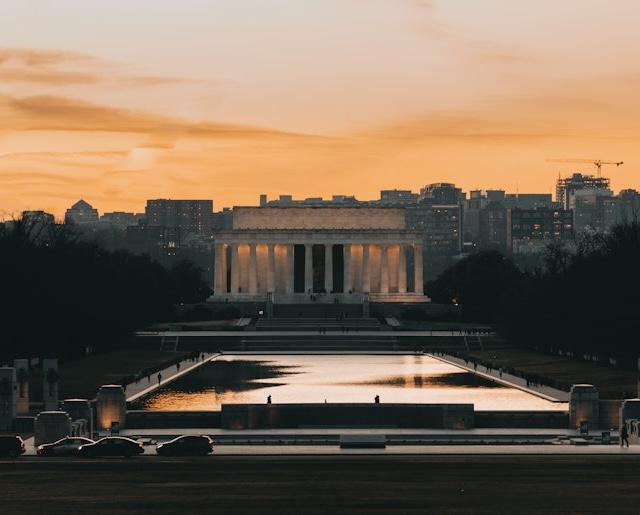
Lincoln Memorial with marsh in foreground, ca. 1917. Sourced from the Library of Congress.
The Lincoln Memorial & Reflecting Pool
Opened to the public in 1922, the Memorial features a 19-foot-tall, 175-ton statue of Lincoln. The Reflecting Pool (which was clearly not completed in our 1917 photo) is a shimmering expanse that illuminates the grand structures in honor of one of the country's most storied leaders. This year, the Memorial's Undercroft will reopen its newly renovated, 15,000-square-foot exhibition space to the public.
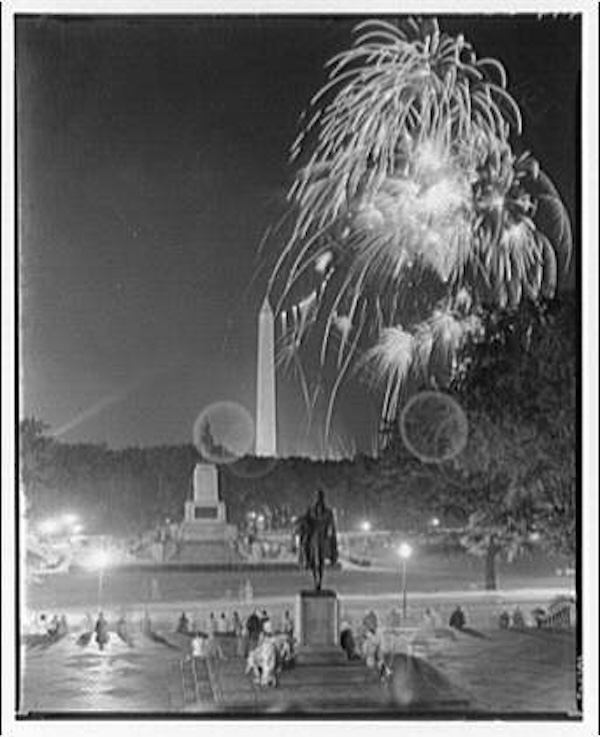
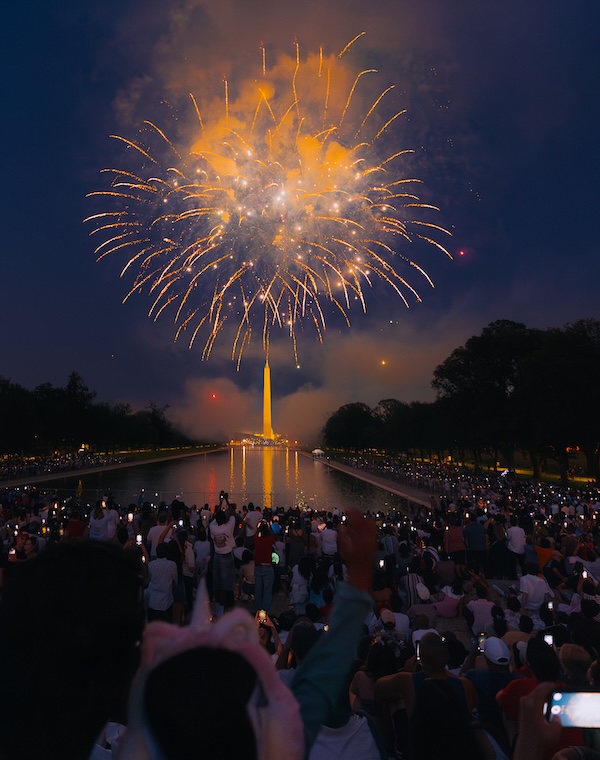
Fireworks from Treasury Department steps with Washington Monument. Horydczak, Theodor, approximately 1890-1971, photographer Created / Published ca 1920-ca 1950. Retrieved from the Library of Congress.
The Washington Monument
Built to honor George Washington, the Continental Army's commander-in-chief and the first United States president, the Washington Monument was once the tallest building in the world at just over 555 feet. The monument to America’s first president still holds the title of the world’s tallest stone structure and obelisk and no building in DC can be built to exceed its height.
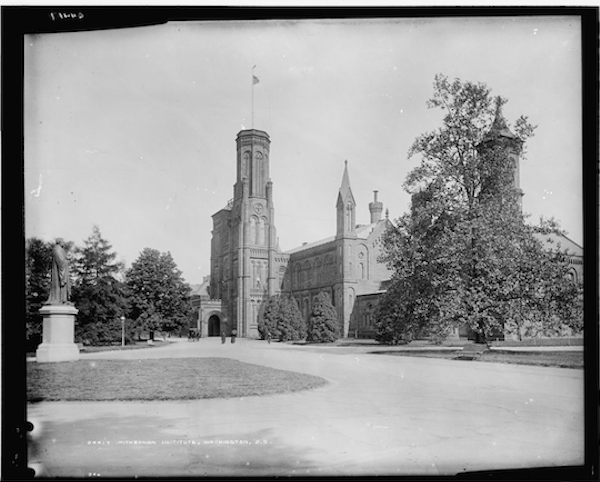
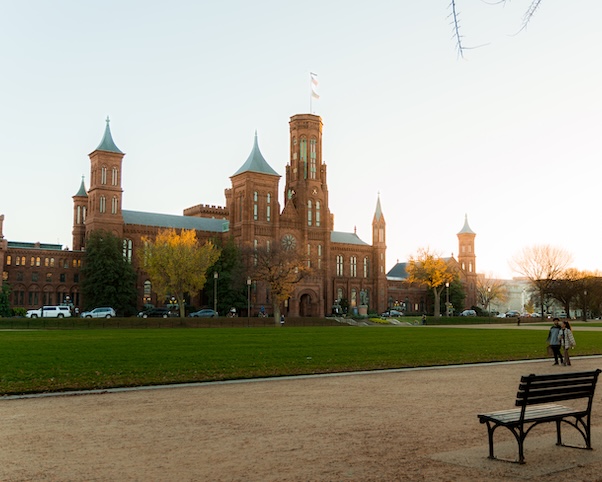
Smithsonian Institute, Washington, D.C. Names Jackson, William Henry, 1843-1942, photographer Detroit Publishing Co., publisher Created / Published [between 1880 and 1897]. Retrieved from the Library of Congress.
"The Smithsonian Castle"
Known colloquially as the Castle, the Smithsonian Institution Building is the Institution’s first and oldest home, open since 1855. As of now, the Castle is not currently open to the public. However, the building will pause restoration efforts to temporarily reopen to the public from Memorial Day through Labor Day this year.
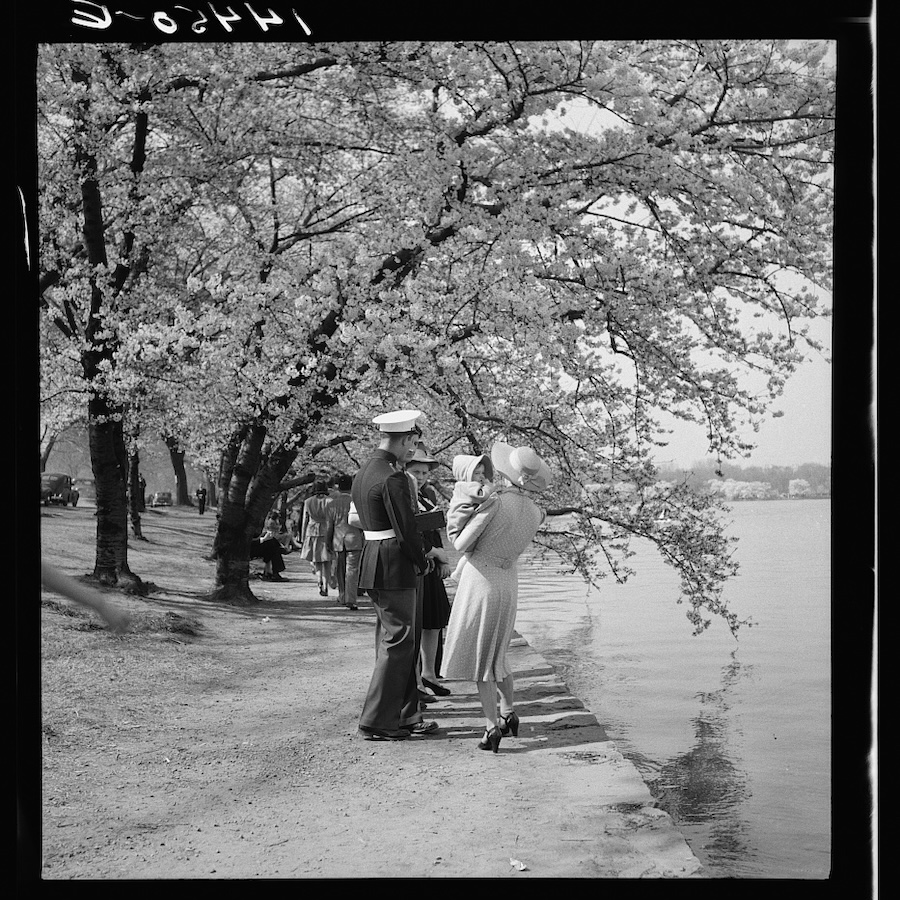
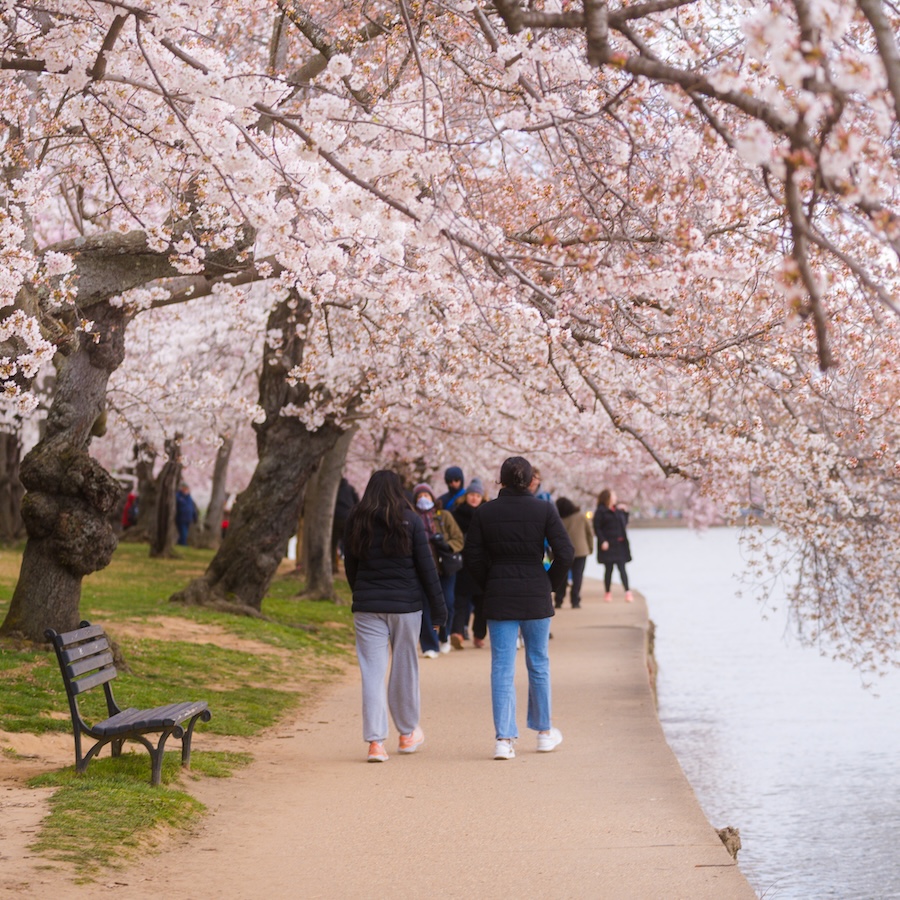
Cherry Blossom Festival. Tidal Basin, Washington, D.C. Names Roberts, Martha McMillan, photographer Created / Published 1941 May. Retrieved from the Library of Congress.
Cherry Blossom Season at the Tidal Basin
Scenic at any time of the year, the Tidal Basin has become the best spot to ring in spring since the 1912 gift of 3,000 cherry blossom trees. Join the celebration during this year's National Cherry Blossom Festival, from March 20 through April 12.
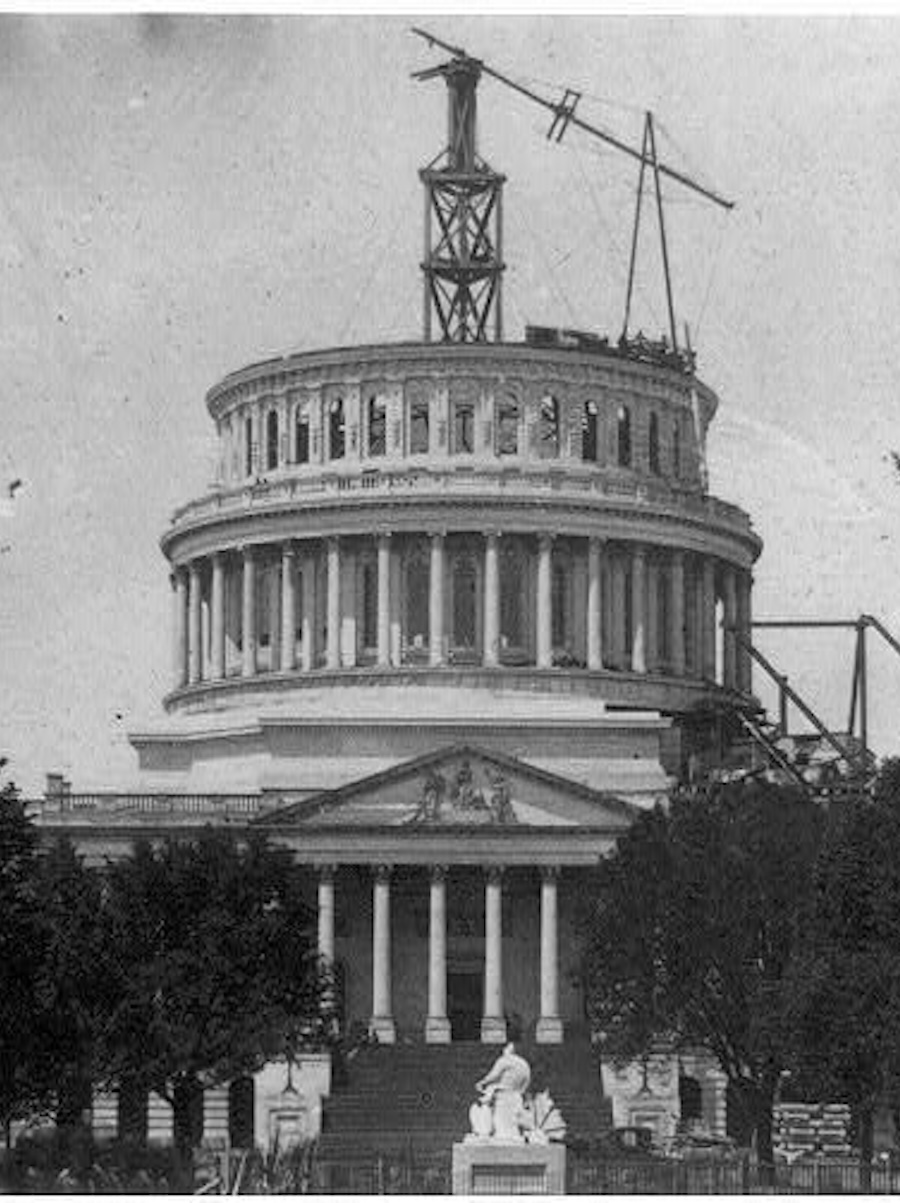
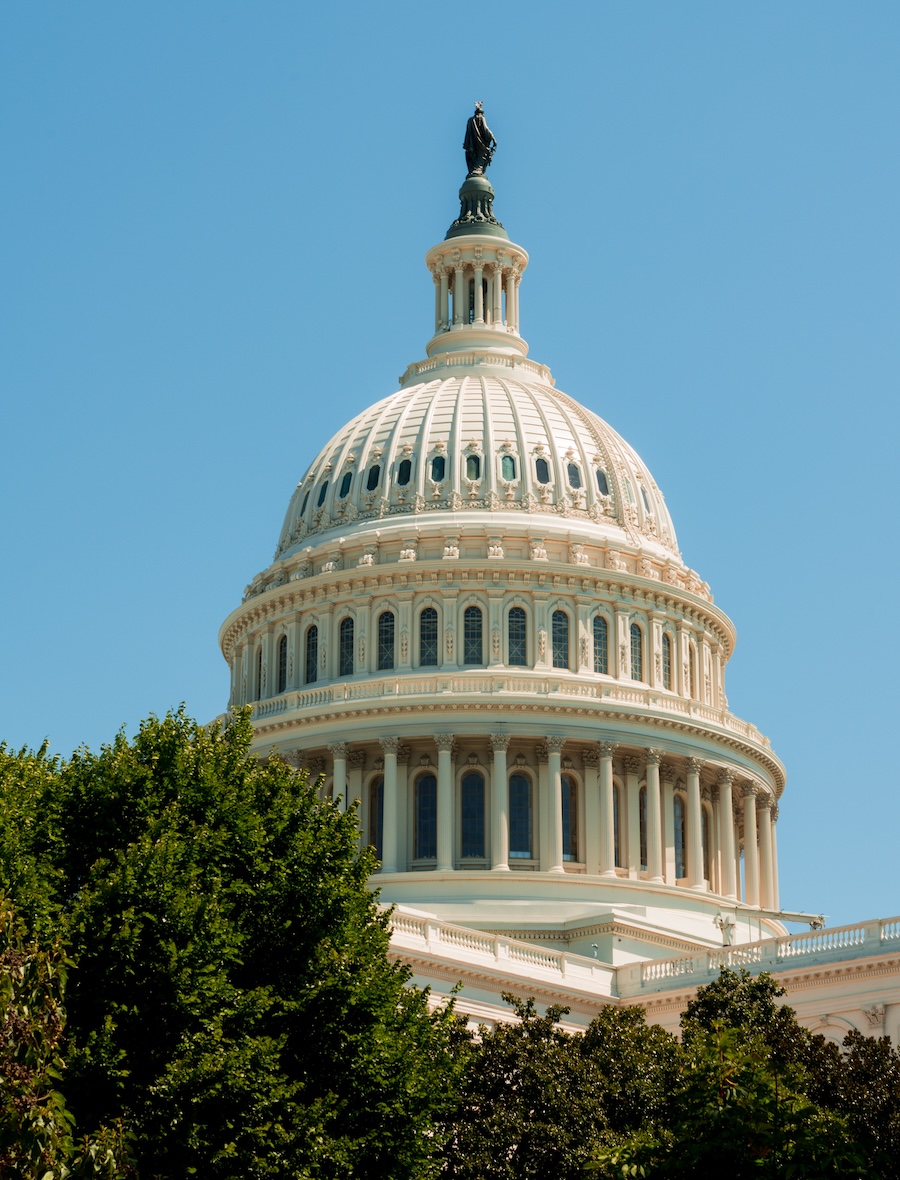
Wood, J., photographer. (1861) Capitol Dome Construction. Washington D.C, 1861. 9 May. [Photograph] Retrieved from the Library of Congress.
The U.S. Capitol Building
Did you know the Capitol Building originally had a much smaller dome? In 1855, Congress decided on a new cast-iron dome three times the height of the original after the Capitol Building itself had expanded. The new dome was still being built during the inauguration of Abraham Lincoln in 1861. Take a Capitol Hill architecture tour to learn more.
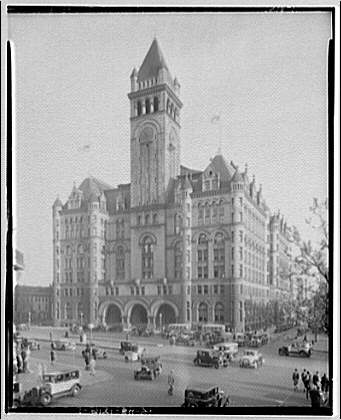
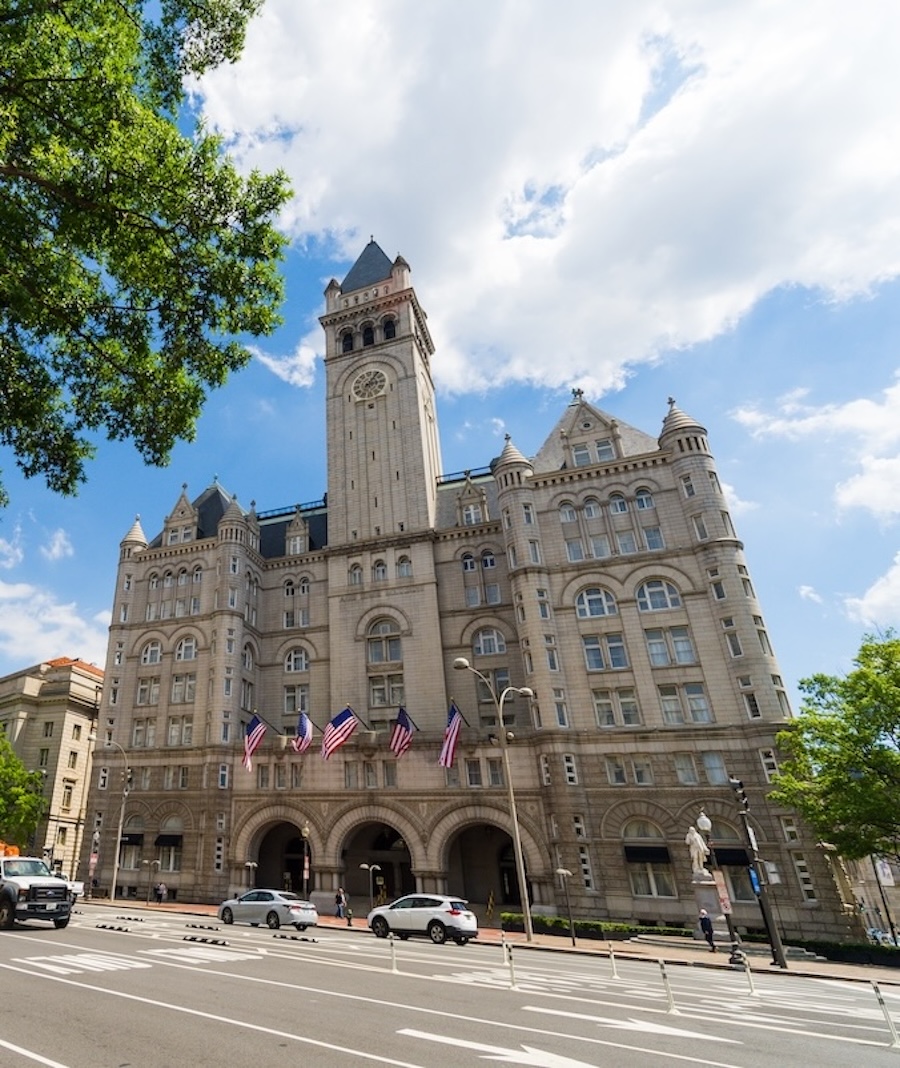
Library of Congress, entrance stairway, Washington, D.C. Names Jackson, William Henry, 1843-1942, photographer Detroit Publishing Co., publisher Created / Published [between 1880 and 1897]. Retrieved from the Library of Congress.
The Old Post Office Tower
Completed in 1899, the Old Post Office and Clock Tower showcases Richardsonian Romanesque architecture and its bell tower is the third tallest structure in the District. The building was used as the city's main General Post Office until 1914. The building is currently closed to the public as future management is determined. Check out the lobby of the Waldorf Astoria hotel for a preview into the building's grand interior.
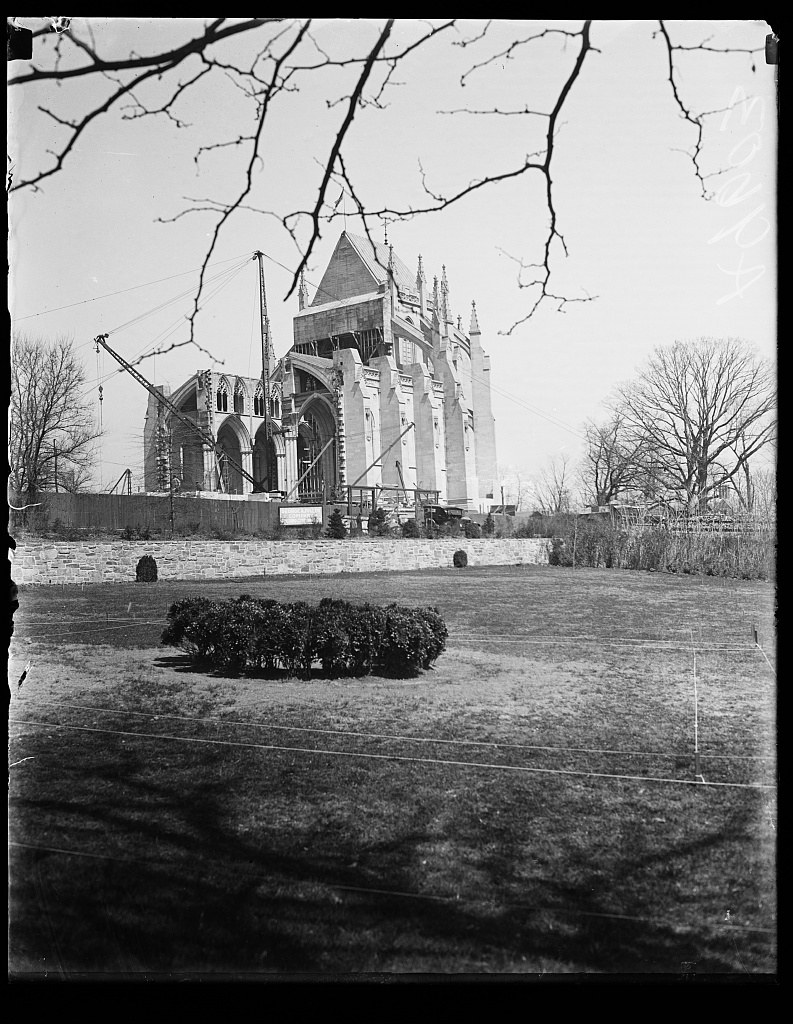
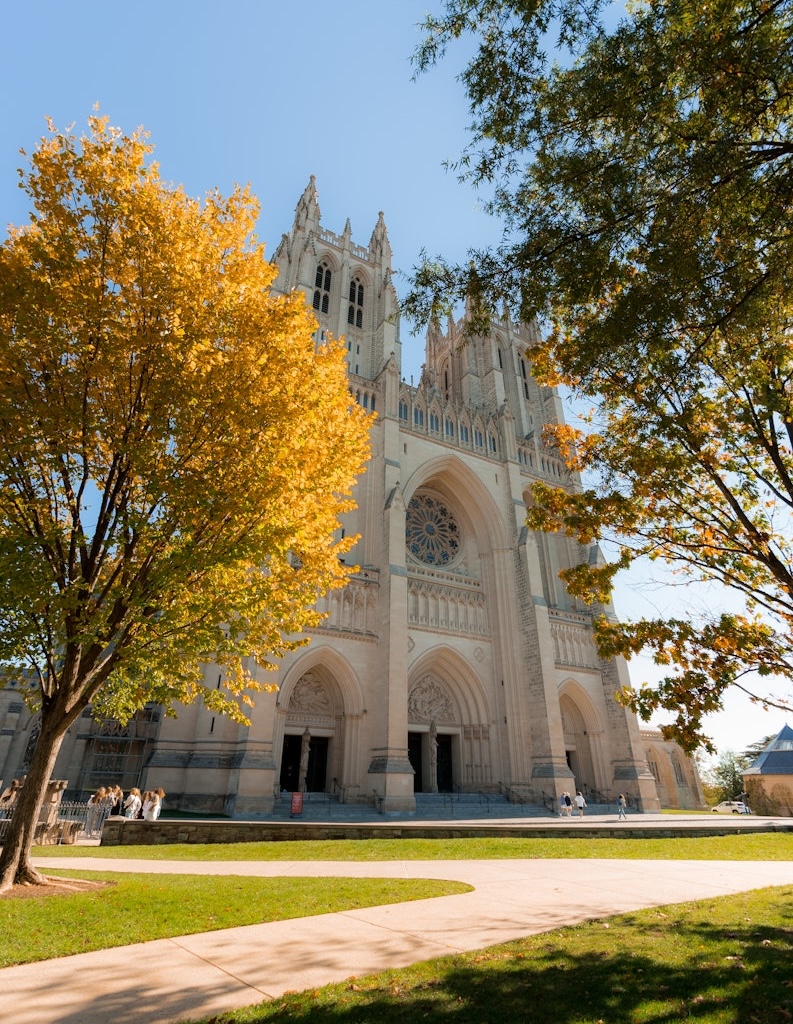
Harris & Ewing, photographer. (1925) National Cathedral under construction. Washington D.C., 1925. Retrieved from the Library of Congress.
Washington National Cathedral
Pierre L'Enfant's 1792 plan for DC included a "great church for national purposes". Although it took nearly 200 years, the Washington National Cathedral opened to the public on Sept. 29, 1990 when the "final finial" was placed in the presence of President George H.W. Bush. The foundation stone had been laid in the presence of President Theodore Roosevelt on Sept. 29, 1907.
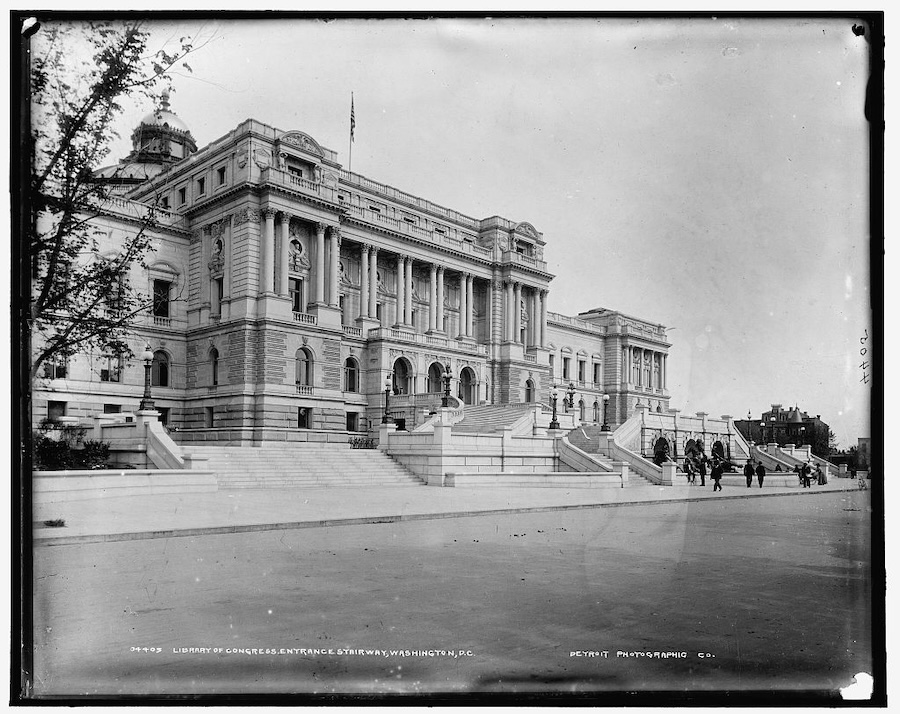
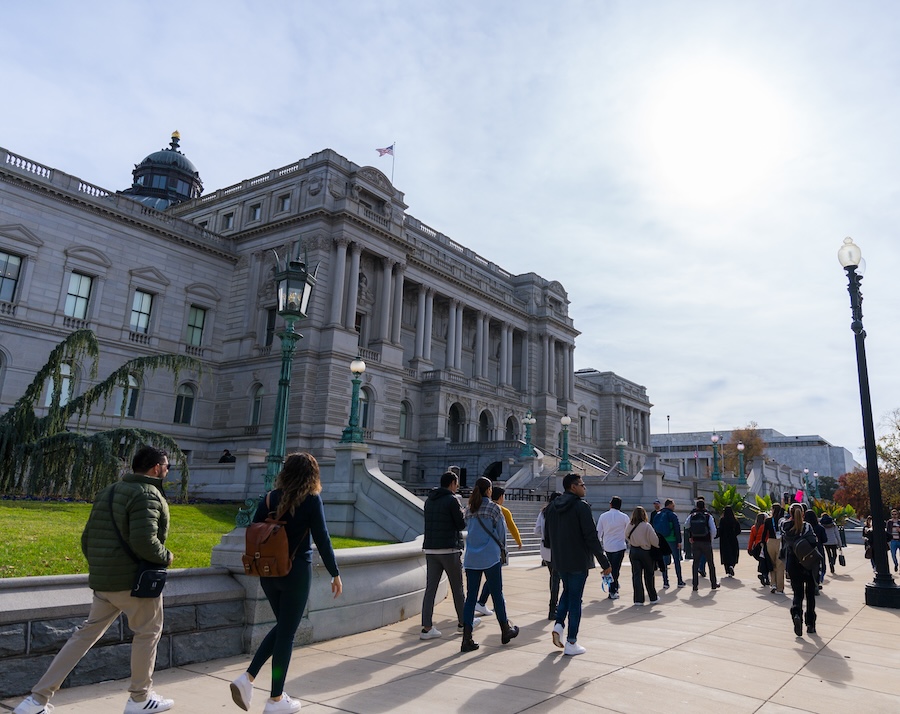
Library of Congress, entrance stairway, Washington, D.C. Names Jackson, William Henry, 1843-1942, photographer Detroit Publishing Co., publisher Created / Published [between 1880 and 1897]. Retrieved from the Library of Congress.
Library of Congress
Following its founding in 1800 (making it the oldest federal cultural institution in the country), the Library initially existed in a boarding house and was later relocated to the U.S. Capitol Building. Its first permanent, dedicated location, the Thomas Jefferson Building, opened in 1897, followed by the John Adams Building (1939), the James Madison Memorial Building (1980) and later the Packard Campus for Audio Visual Conservation in Culpepper, Va. (2007).